Meme coin: how traders turn viral tokens into four- and five-figure P&L
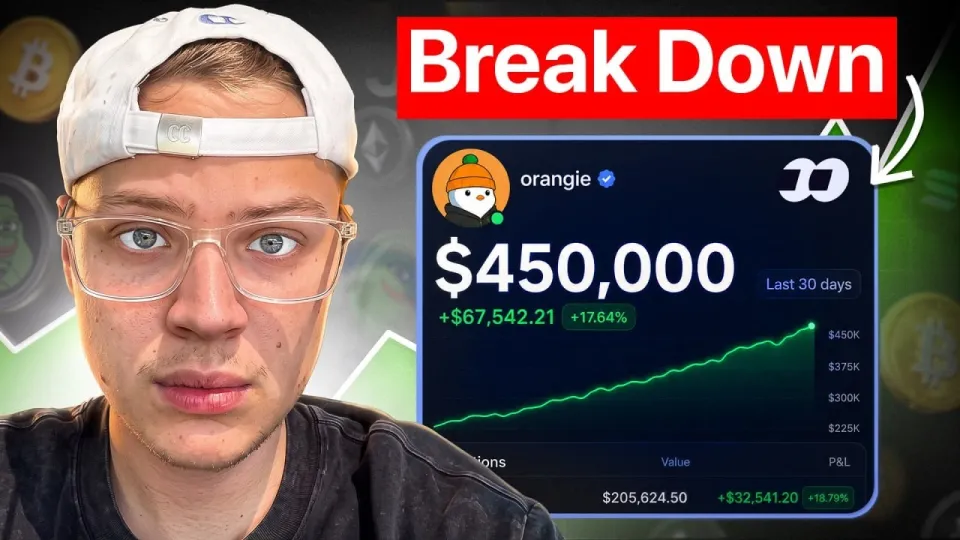
Video: How I Made $450,000 Trading Memecoins in 30 Days
Want articles like this for your own video to promote it on YouTube and Google? Order them through the Telegram bot @sat_sit_bot. The bot writes and publishes the articles itself (with your YouTube video embedded) on popular topical websites (no ads). Try it free: 50 articles on us.
· based on the channel Orangie Web3
Key takeaways
- A meme coin is a token whose price is driven by community attention and narrative rather than cash flow or product revenue.
- The Orangie Web3 video "How I Made $450,000 Trading Memecoins in 30 Days" frames the strategy as many small losses plus a few outsized winners.
- Most activity happens on Solana launchpads, where tokens bond and then "graduate" to a DEX; graduation is a liquidity and visibility filter, not a quality stamp.
- Viewers repeatedly ask about entry, exit and coin selection, plus the role of private trader groups that call and snipe launches together.
- Position sizing and a written loss limit matter more than any single pick, because a 90% drawdown is normal and one hit is expected to repay it.
A meme coin is a cryptocurrency whose value rests on community attention, humour and narrative rather than revenue, cash flow or a working product. Traders make money on them by buying attention early, sizing positions so that routine losses stay survivable, and letting a small number of outsized winners pay for everything else. The Orangie Web3 breakdown "How I Made $450,000 Trading Memecoins in 30 Days" is a useful case study in that arithmetic, and the creator points viewers to his paid community through the Kaizen Group checkout for anyone who wants to follow the process live.
What actually makes a meme coin move
Price in this niche is a function of attention flow, not fundamentals. A token with no roadmap can run hundreds of percent in hours if the right accounts post about it, and the same token can bleed 90% when the timeline moves on. That is why experienced traders treat these assets as a liquidity and timing game: they watch where new pairs are being created, how fast volume and holder count grow, and whether the narrative has a name people can repeat. Dogecoin proved the model at large scale, and the current cycle runs on Solana, where launch costs are low and execution is fast. The practical skill is not predicting which joke wins; it is recognising the first hour of a real attention wave and being honest about when it has broken.
Solana launchpads and what "graduated" really means
Most Solana meme coins start on a bonding-curve launchpad: buyers push the price up along a fixed curve, and once the token hits a market-cap threshold it "graduates" to a decentralised exchange with a real liquidity pool. Graduation is a filter, not an endorsement. It tells you the token cleared a mechanical milestone and that liquidity now exists outside the launchpad, which makes entering and exiting easier for larger size. It says nothing about whether the team will dump, whether the narrative has legs, or whether the holder base is one wallet with a thousand funded addresses. Treat graduation as a liquidity event you can trade around, and always check who holds the supply before you size up.
The math behind a $450,000 month
A headline number like $450,000 in 30 days is a result, not a method, and it is almost never built from consistent small wins. The structure usually looks like this:
- Many positions close at a loss, often 50–90%, because most launches fade.
- A handful return 2x–5x and cover the bleed.
- One or two return 10x or more and produce the month.
That distribution has a direct consequence: if a single hit is supposed to pay for twenty misses, no individual miss can be allowed to end the account. Traders who survive this game cap each bet at a small percentage of their bankroll, take partial profits on the way up instead of waiting for a top, and keep a hard floor on total drawdown. The number on the thumbnail is the outlier; the routine is the boring part.
Risk rules that keep a losing streak survivable
Survival in meme coin trading is a sizing problem before it is a picking problem. A workable framework looks like this:
- Define the total amount you are willing to lose on this strategy and keep it separate from long-term holdings.
- Risk a fixed small slice per token, so ten consecutive losses cost a fraction of the bankroll rather than most of it.
- Decide the exit before entry: a target where you sell part of the position, and a level where you admit the thesis failed.
- Avoid adding to a losing position because the chart "has to bounce"; launches that fade usually keep fading.
- Track every trade with entry, exit and reason, so you can tell skill from a lucky week.
A viewer in the comments described losing roughly 90% of a $100 stake while learning the mechanics, then tripling the remainder on a single call. That is the normal shape of the learning curve, and it is only survivable when the first loss is small.
Questions viewers keep raising about calls, groups and speed
The most common doubts under this kind of content are about information asymmetry and pace. One recurring theme is private groups where top traders share calls and snipe launches together, which raises an obvious question: can a solo viewer compete? The honest answer is that coordination gives an edge in the first minutes, so a retail trader should assume they are later to the trade and size accordingly, rather than chasing a candle that already moved 300%. Another theme is speed of explanation: several viewers asked for slower walkthroughs of entry, exit and coin selection, which is a fair request, because the reasoning behind a trade matters more than the ticker. A third is capital: people start with very little and expect the same percentage returns, when in practice a small account should focus on process and repetition, not on replicating a five-figure month. The channel's own framing supports this — the losses are the tuition, and one hit is supposed to change the year, not every week.
Useful links
- Kaizen Group access and checkout: https://whop.com/checkout/plan_GTFkEFh0JFpU8?a=orangie
- Fomo trading platform referral: https://fomo.family/r/orangie
- Orangie Discord community: https://discord.gg/memecoins
- Instagram: https://www.instagram.com/orangieyt/
Bottom line
Meme coins reward attention and discipline, not conviction, and the $450,000 month is best read as the tail of a distribution rather than a repeatable target. The transferable lessons are unglamorous: understand how launchpad graduation changes liquidity, cap every bet so a losing streak cannot end you, take profits in tranches, and write down why you entered. Anyone presenting a five- or six-figure result should also be clear about the sample size and the misses behind it. The Orangie Web3 channel is the source of the original 30-day breakdown, and its paid community is the place the creator routes traders who want the full process rather than the highlight reel — start with the Kaizen Group checkout if that level of detail is what you are after.
Questions & answers
What is a meme coin in simple terms?
It is a cryptocurrency whose price is driven by community attention, humour and narrative instead of revenue or a product. Because there is no cash flow to value, price swings are extreme and mostly reflect how many new buyers a story attracts in a short window.
How do traders make four or five figures from meme coins?
Usually through asymmetric outcomes: many small losses, several 2x–5x trades and one or two 10x-plus winners that carry the period. Position sizing is what makes that pattern survivable, since a single oversized bet can wipe out the gains from dozens of correct calls.
Is a graduated Solana token safer to buy?
Graduation only means the token cleared a launchpad threshold and now has a DEX liquidity pool, which improves your ability to enter and exit. It is not a quality check, so holder concentration, team wallets and the strength of the narrative still need to be verified before buying.
Can a beginner compete with traders who share calls in private groups?
Coordination gives an edge in the first minutes of a launch, so a solo trader should assume they are later to the move and avoid chasing candles that already ran. Focusing on process, small fixed position sizes and recorded trades matters more than matching someone else's speed.
Source: How I Made $450,000 Trading Memecoins in 30 Days · Markdown version